

Tickets listed for resale with TiqAssist may appear on marketplaces above face value.

Resale Value

Face Value

During my first couple of seasons, I made an expensive mistake — I believed resale value should always match or exceed face value. I held out trying to sell at face value, only to end up selling for pennies on the dollar or giving tickets away for free at the last minute.

Let me break down the following terms to help you avoid some of the top mistakes we see season ticket holders make: Face Value, Resale Value, and Listing Prices.

Hope this breakdown helps!

Chris Babu

TiqAssist Founder & CEO

Face Value

What is “Face Value?”

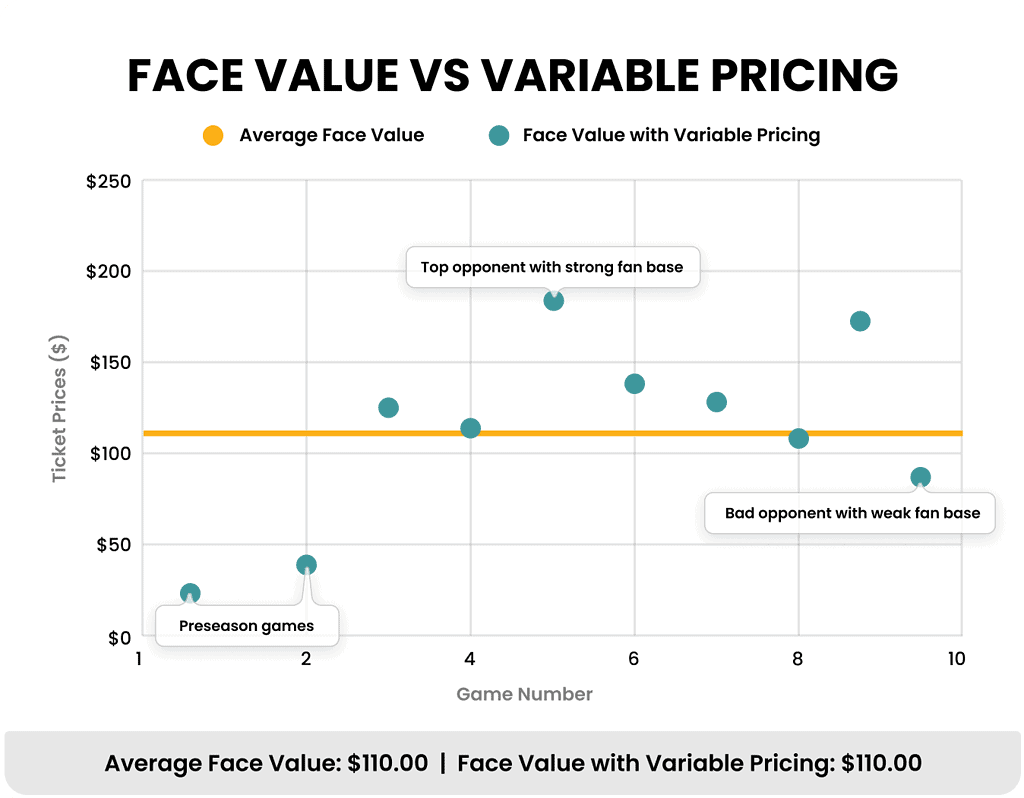
There’s two types of face value that teams provide, “Average Face Value” and “Variable Pricing”. Both are determined long before the season starts, so they don’t accurately reflect how much you can sell your tickets for TODAY.

Average Face Value

Simply what you paid per ticket (total season ticket cost ÷ number of tickets). This version of face value is the most problematic, as it doesn’t capture how demand varies for each game.

Variable Pricing

Some teams assign different face values for each game based on expected demand. You may see the best game of the season cost up to 5 times more than the worst game of the season. While variable pricing is closer to reflecting resale value than average face value, variable pricing has the same issue of being outdated since each game value is determined long before the season starts.
Important to note

Most teams don’t expect you to recoup your cost on every game, or every season at that. Feel free to ask your season ticket rep if you want a second opinion! Unfortunately, ticket demand and team performance fluctuate too much from season to season.  Also, keep in mind there are many additional value-added perks to owning season tickets (no buyer fees, player access, stadium experiences, below-market playoff tickets, gifts, merch discounts and more).
Resale Value

(aka "Sales Prices" or "Market Value")

What is “Resale Value?”

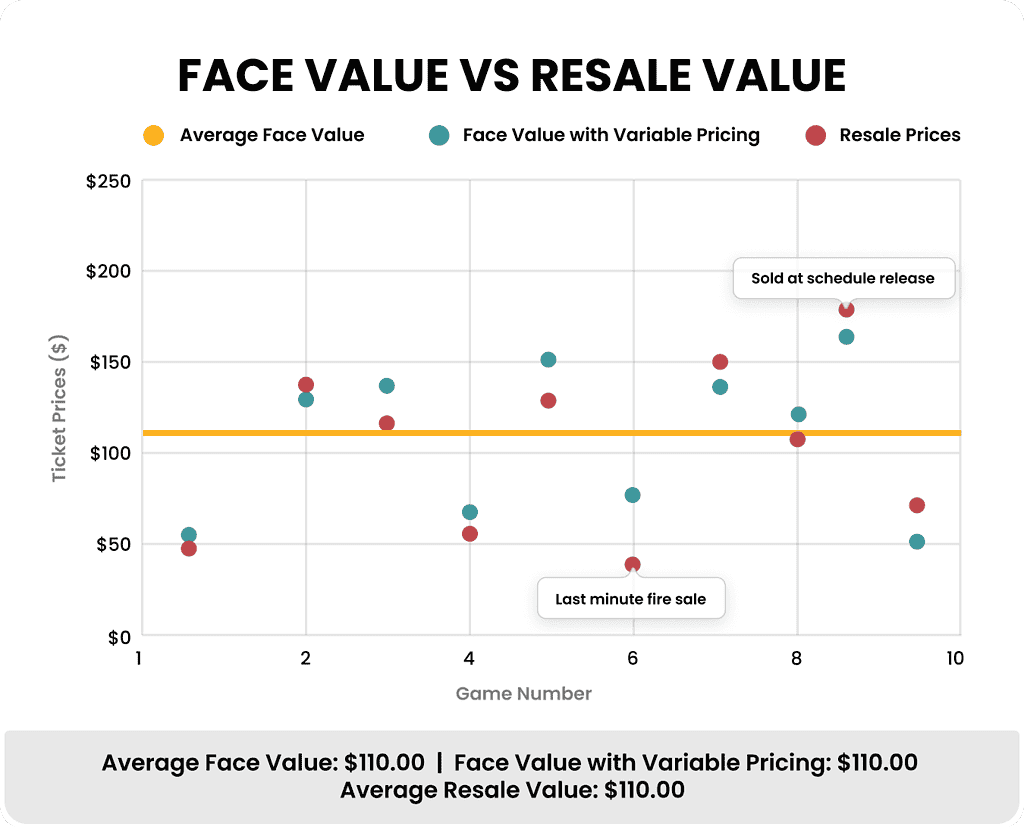
This is what a buyer would actually pay for your seats right now, best captured by recent sales data. Unfortunately most marketplaces provide only listings data, not sales data.

Resale values fluctuate based on a variety of factors, some of which are: current ticket supply and demand, key injuries, home and away team performance, and how close to the game you are selling.

Adding “Resale Value” to the previous chart, you can see Resale Value has even more variation than Face Value. And if you sell too late, it’s possible the Resale Value is a fraction of Face Value.

How do TiqAssist’s sales prices differ from those of the average season ticket holder?

For some games, you may get lucky by selling on your own and pursuing a higher listing price strategy than TiqAssist. But, with TiqAssist, expect higher sales prices over the full season driven by the following: more consistent sales, way fewer fire sales, along with some “wow!” sales along the way. That’s the power of reaching buyers from 10+ marketplaces, enhanced marketplace pricing data, and the TiqAssist Price Guarantee.

Listing Prices

Marketplace Listing Prices ≠ “The Going Rate”

Many sellers price based on what they see listed near their seats. However, unsold listings don’t represent the “going rate” — they just show what hasn’t sold. Many listings are overpriced for a variety of reasons. It could be because sellers are hoping to recoup face value even though it’s highly unlikely, or sellers haven’t updated their listing prices after the market has dropped.

Important to note:

As of May 2025, the prices you see for listings on every marketplace already have the marketplace buyer fees baked in. For example – if you see a nearby listing for $100 and price your listing at $100, your listing will show at $120-$130. That’s because marketplaces are required to include their buyer fees upfront now.

How To:
Maximize Your Resale Value

  • 1
    Don't let a small loss turn into a big loss

    The most successful season ticket holders treat resale strategically — instead of trying to break even on every single game, accept that for certain games the market demand will be below face. So sell those games before the losses get larger as the game approaches.

  • 2
    Sell premium games strategically

    Remember, your season ticket package includes premium games that sell well above face value (playoffs, high demand matchups) —use those wins to offset games where you’ll sell below cost.

  • 3
    List as early as possible

    For most teams, prices drop starting 50 days before the game. Listing early gives you time to test higher prices before the market declines.

SAVE TIME
HIGHER SALE PRICES
SALE GUARANTEE